
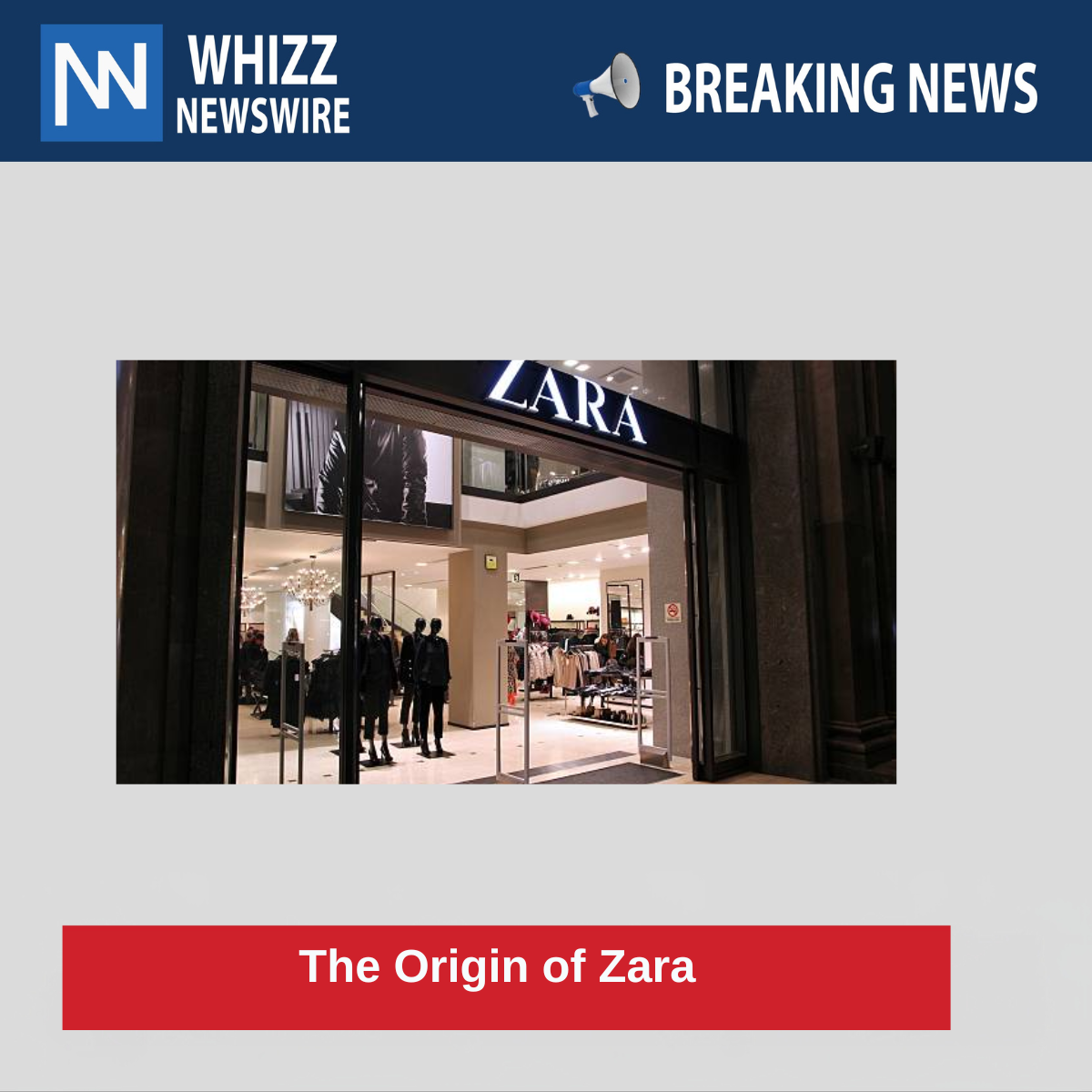
Zara is now one of the most recognized names in the fashion world, a brand known for bringing high-fashion styles to the masses with stunning speed. But the story of Zara’s origin is far more fascinating than most people know. It’s a tale of humble beginnings, sharp instincts, and a revolution in the fashion industry. From a tiny shop in northwestern Spain to thousands of stores across the globe, Zara’s journey is a blueprint for retail success.
Let’s explore the detailed history and origin of the Zara brand.
Where It All Began: A Coruña, Spain (1975)
The story begins in 1975 in A Coruña, a small coastal city in Galicia, northwestern Spain. This is where Amancio Ortega Gaona, a Spanish entrepreneur, opened the first Zara store. Ortega came from very humble roots; he was born in 1936 to a railway worker and left school at the age of 13 to support his family.
As a young man, Ortega began working as a delivery boy for a local clothing store, where he learned how garments were made and sold. He became deeply interested in the fashion business and eventually started a small workshop in the 1960s, producing quilted bathrobes under the company name Confecciones Goa.
Driven by the desire to sell directly to customers instead of through wholesalers, Ortega decided to open his own retail store. That’s when Zara was born.
The Name “Zara”: A Lucky Mistake
Originally, Ortega wanted to name the store “Zorba”, inspired by the 1964 movie Zorba the Greek. He even had the signs made for the storefront. But as luck would have it, there was a bar just a few blocks away named “Zorba.”
To avoid confusion or legal issues, Ortega and his team rearranged the letters and came up with “Zara.” It was short, catchy, and unique and it stuck.
That simple name change marked the beginning of a global brand.
The First Store: Style Meets Affordability
Zara’s first store was modest in size, but it introduced a powerful idea: offering fashionable clothes inspired by luxury brands at affordable prices.
Instead of producing clothes based on what designers or magazines were dictating, Ortega focused on what customers actually wanted. This made Zara different from traditional fashion retailers.
Even in the beginning, the store:
- Used in-house designers to copy high-end fashion looks at a fraction of the cost.
- Produced in smaller quantities to reduce waste.
- Responding quickly to trends and customer demand.
This was the foundation of the “fast fashion” concept long before the term became mainstream.
Zara’s Secret Weapon: Speed
One of Zara’s most revolutionary contributions to retail was its logistics and supply chain model. While other fashion companies planned collections months in advance, Zara could go from concept to store shelves in as little as two to three weeks.
Here’s how they did it:
- Zara designs, manufactures, and distributes most of its products itself.
- Stores send daily sales data and feedback to headquarters in Spain.
- New collections are released twice a week, keeping inventory fresh and fast-moving.
This meant that if a new style became trendy, Zara could design and deliver it to stores almost immediately giving them a huge edge over slower-moving competitors.
Formation of Inditex: The Power Behind Zara
In 1985, Amancio Ortega established Inditex (Industria de Diseño Textil) as the parent company of Zara. This allowed the business to grow even more efficiently, managing logistics, design, and global operations under one umbrella.
Over time, Inditex added several other brands to its portfolio:
- Massimo Dutti
- Pull&Bear
- Bershka
- Stradivarius
- Oysho
- Zara Home
Still, Zara remains the flagship brand and accounts for the majority of Inditex’s sales and global recognition.
Going Global: Expansion Across Continents
After its initial success in Spain, Zara expanded internationally in 1988, opening its first store in Portugal. From there, it quickly moved into the United States, France, and Mexico.
By the late 1990s and early 2000s, Zara was opening stores in major cities like:
- New York
- Paris
- Tokyo
- Dubai
- Moscow
Instead of spending heavily on advertising, Zara focused on:
- Prime retail locations in high-traffic shopping districts
- High-speed logistics centers to ensure fast restocking
- Minimal marketing, letting the clothes and in-store experience speak for themselves
Today, Zara has over 2,000 stores in more than 90 countries, making it one of the largest fashion retailers on the planet.
The Man Behind Zara: Amancio Ortega
Zara’s success turned Amancio Ortega into one of the richest people in the world. Despite his wealth, he remained famously private, rarely giving interviews and keeping a low profile.
He stepped down as chairman of Inditex in 2011 but continues to be a major shareholder. His business philosophy speed, flexibility, customer focus, and frugality remains at the core of Zara’s operations today.
Evolution and Sustainability Efforts
Zara, like many fast fashion brands, has faced criticism for environmental impact and labor practices. In response, the company has taken steps to improve:
- Launching eco-conscious collections like “Join Life”
- Pledging to use 100% sustainable cotton, linen, and polyester by 2025
- Increasing use of renewable energy and reducing water consumption in production
While it still has progress to make, Zara is adapting to growing global demand for ethical and sustainable fashion.
Conclusion: The Legacy of Zara
Zara’s origin story is a remarkable example of how a clear vision, bold strategy, and relentless execution can build a global empire. From a small shop in a Spanish city to one of the most powerful brands in fashion, Zara’s rise is nothing short of extraordinary.
It changed the rules of the retail world by making high-end fashion accessible, prioritizing speed over tradition, and placing the customer at the center of its universe.
As the world of fashion continues to evolve, one thing is clear: Zara didn’t just follow trends, it created them.
For similar content visit here