
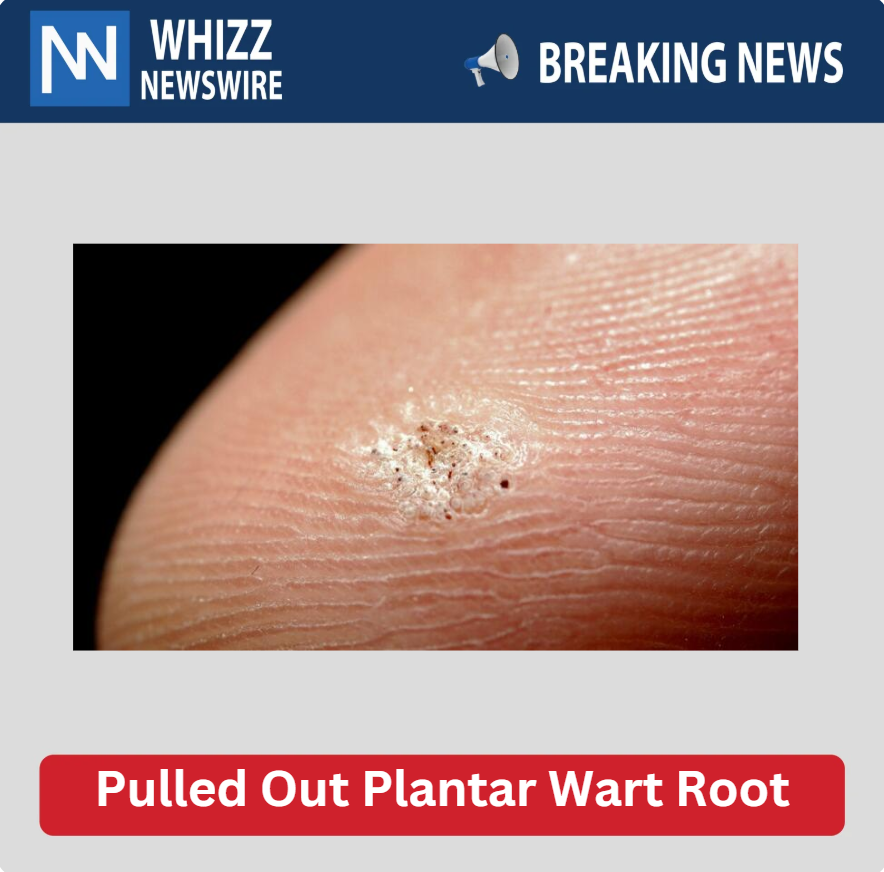
A plantar wart is a type of wart that appears on the soles of your feet. It’s caused by the human papillomavirus (HPV), which enters the skin through tiny cuts or weak spots. Since it’s located where you walk or stand, pressure often makes the wart grow inward, under a thick layer of skin.
Plantar warts can:
- Be painful, especially when walking
- Have black dots (clotted blood vessels)
- Appear rough, grainy, or flattened
- Be mistaken for calluses
What People Call the “Root” of a Wart
Many think warts have a “root” like a splinter, but that’s a misunderstanding. Warts do not have roots. What you may see when you “pull out the root” is likely:
- Clotted capillaries (black dots or threads)
- A fibrous center of the wart
- Some infected tissue
So, if you pulled something out:
- It’s possible you removed some or most of the wart
- But HPV-infected cells may still remain
- Warts can grow back if any virus is left in the skin
What to Do After Pulling It Out
1. Clean the Area Immediately
- Use warm water, soap, and then apply an antiseptic
- Do not scratch or pick further, as this can spread the virus
2. Cover It
- Use a sterile bandage to protect the spot
- Change it daily or when wet
3. Watch for Signs of Infection
- Redness, pus, swelling, increased pain = see a doctor
4. Treat Any Remaining Wart
- Over-the-counter treatments with salicylic acid can help
- Cryotherapy (freezing) from a doctor is more effective
- Laser or surgical removal may be needed for stubborn warts
Tips to Prevent Recurrence
- Don’t walk barefoot in public areas (like pools or locker rooms)
- Keep feet clean and dry
- Avoid sharing shoes, socks, or towels
- Strengthen your immune system (rest, nutrition, stress management)
When to See a Doctor
If:
- The wart returns
- It spreads to other areas
- It’s very painful
- It bleeds or becomes infected
Then consult a podiatrist or dermatologist.