
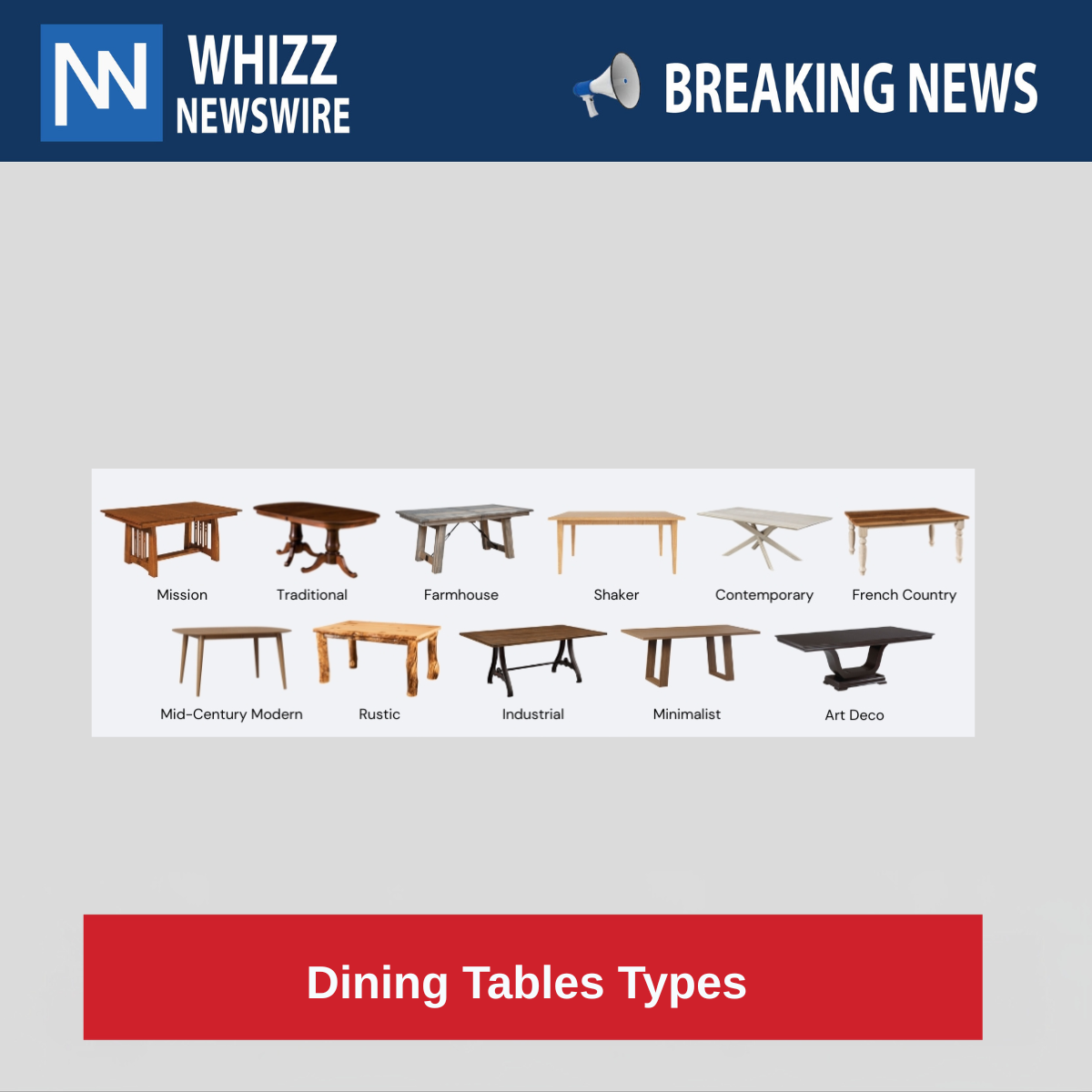
Types of dining tables categorized by shape, material, functionality, and style, with insights into their history, advantages, and best use cases:
I Dining Tables by Shape
1. Rectangular Dining Table
- Overview: The most classic and popular shape worldwide. It has been a household staple for centuries due to its practical design.
- Advantages:
- Seats more people (ideal for large families or entertaining)
- Works well in long or narrow dining rooms
- Easier to place side dishes and decor in the center
- Seats more people (ideal for large families or entertaining)
- Common Sizes:
- Seats 4: 48 inches long
- Seats 6: 60–72 inches
- Seats 8–10: 84–96 inches
- Seats 4: 48 inches long
- Best For: Formal dining rooms, large spaces, family gatherings
2. Square Dining Table
- Overview: Symmetrical and perfect for small spaces, square tables encourage intimate dining.
- Advantages:
- Creates a balanced, modern look
- Everyone is equidistant for easy conversation
- Creates a balanced, modern look
- Challenges:
- Not ideal for more than 4–6 people
- Can look awkward in narrow rooms
- Not ideal for more than 4–6 people
- Best For: Apartments, small dining rooms, casual use
3. Round Dining Table
- Overview: Traditionally used in European-style dining, round tables are warm and welcoming.
- Advantages:
- No corners = better for tight spaces and traffic flow
- Promotes equal seating and conversation
- A single pedestal base offers more legroom
- No corners = better for tight spaces and traffic flow
- Limitations:
- Larger round tables can make it hard to reach food in the middle
- Larger round tables can make it hard to reach food in the middle
- Best For: Families, small to medium-sized dining areas
4. Oval Dining Table
- Overview: A compromise between rectangular and round styles.
- Advantages:
- Feels spacious but soft due to curved edges
- Comfortable for group dining, with the ability to seat extra people
- Feels spacious but soft due to curved edges
- Best For: Transitional interiors, long rooms needing softer aesthetics
II. Dining Tables by Material
1. Solid Wood
- Examples: Oak, teak, mahogany, pine, acacia
- Characteristics:
- Classic, durable, timeless
- Can be refinished over time
- Adds warmth and a natural touch to the interior
- Classic, durable, timeless
- Best For: Traditional, rustic, farmhouse, and Scandinavian styles
2. Glass
- Types: Clear, frosted, or tinted
- Characteristics:
- Modern and light appearance
- Makes small rooms feel bigger
- Requires frequent cleaning due to smudges
- Modern and light appearance
- Best For: Modern, contemporary, minimalist spaces
3. Metal
- Types: Stainless steel, wrought iron, aluminum
- Characteristics:
- Very durable and industrial-looking
- Easy to clean and low-maintenance
- Very durable and industrial-looking
- Often paired with: Wood or glass tops
- Best For: Industrial, urban loft-style, outdoor dining
4. Marble or Stone
- Types: Real marble, faux-marble, granite, quartz
- Characteristics:
- Luxurious and unique (no two slabs are the same)
- Very heavy and fragile must be sealed
- Expensive and sensitive to stains
- Luxurious and unique (no two slabs are the same)
- Best For: Glam, luxury, classic interiors
5. Laminate / MDF
- Types: Wood veneers, plastic laminates
- Characteristics:
- Budget-friendly and available in many styles
- Less durable than solid wood
- Prone to water damage and warping
- Budget-friendly and available in many styles
- Best For: Temporary setups, rentals, low-traffic homes
III. Dining Tables by Functionality
1. Extendable / Expandable Tables
- Features: Come with removable or hidden leaves
- Benefits:
- Offers flexibility for hosting guests
- Space-saving when not extended
- Offers flexibility for hosting guests
- Types:
- Drop-in leaf
- Butterfly leaf (folds and stores inside)
- Drop-in leaf
- Best For: Small families, entertainers, dynamic spaces
2. Drop-Leaf Tables
- Features: Hinged sides that fold down
- Benefits:
- Compact and space-efficient
- Great for kitchens, nooks, or as secondary tables
- Compact and space-efficient
- Best For: Small apartments, multipurpose rooms
3. Convertible Tables
- Features: Can transform between dining, coffee, and console tables
- Best For: Studio apartments, tiny homes, minimalists
4. Bar-Height / Counter-Height Tables
- Height:
- Bar: ~42 inches
- Counter: ~36 inches
- Bar: ~42 inches
- Features:
- Taller than traditional dining tables
- Modern, casual, and often used in open kitchens
- Taller than traditional dining tables
- Best For: Urban interiors, small households, modern bar-style dining
IV. Dining Table Styles
1. Farmhouse
- Features: Chunky legs, distressed wood, whitewashed finishes
- Aesthetic: Cozy, rustic, inviting
- Often Paired With: Benches, mixed chairs
2. Traditional
- Features: Carved wood, ornate legs, rich finishes like cherry or walnut
- Aesthetic: Formal and elegant
3. Modern / Contemporary
- Features: Clean lines, simple shapes, neutral colors
- Materials: Glass, metal, lacquered wood
- Aesthetic: Sleek, minimalist
4. Scandinavian
- Features: Light woods, round or soft corners, simple elegance
- Aesthetic: Clean, airy, functional
5. Industrial
- Features: Metal frames, raw wood, exposed bolts
- Aesthetic: Urban, loft-style, masculine
6. Mid-Century Modern
- Features: Tapered legs, sleek profiles, warm woods like walnut
- Aesthetic: Retro meets modern minimalism
How to Choose the Right Dining Table
- Room Size & Shape:
- Measure the dining area and leave at least 36 inches clearance around the table for chairs and movement.
- Round and square tables suit small rooms; rectangular suits larger rooms.
- Measure the dining area and leave at least 36 inches clearance around the table for chairs and movement.
- Seating Needs:
- Think of daily use vs. guests. Consider extendable tables if you host often.
- Think of daily use vs. guests. Consider extendable tables if you host often.
- Lifestyle:
- Do you have kids? Pets? Go for durable materials like solid wood or laminated surfaces.
- Do you have kids? Pets? Go for durable materials like solid wood or laminated surfaces.
- Style Matching:
- Align your table style with the rest of your interior to match the tone, finish, and formality.
- Align your table style with the rest of your interior to match the tone, finish, and formality.
For similar content visit here