
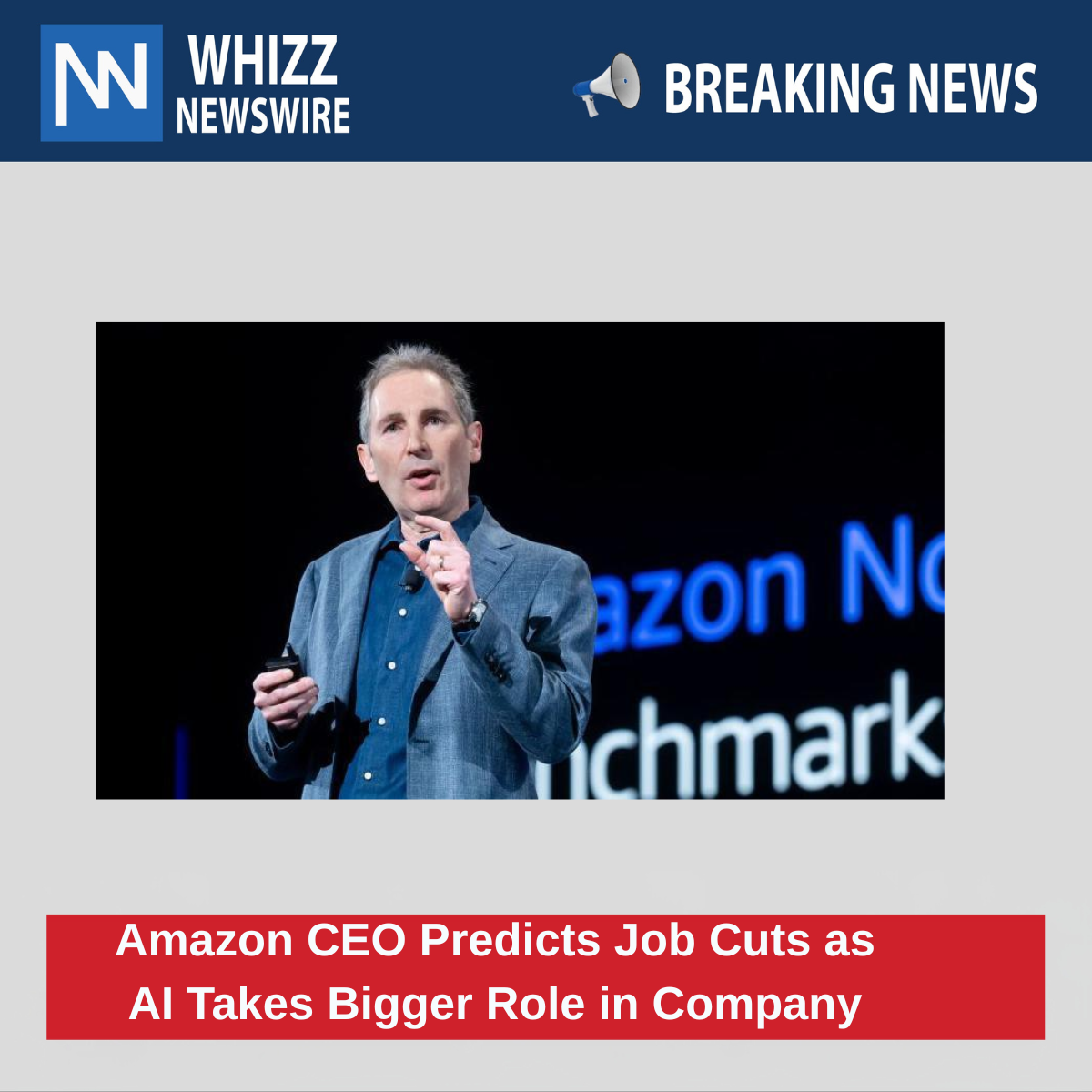
AI Will Lead to a Smaller Corporate Workforce, Says Andy Jassy
Amazon CEO Andy Jassy has warned employees that artificial intelligence (AI) will lead to a smaller corporate workforce over the coming years. In a recent memo to staff, he encouraged workers to “be curious about AI” while also acknowledging that the company will need fewer people for certain roles due to growing automation.
This message puts Amazon among the latest major tech companies to signal that AI adoption could lead to significant changes in how their businesses operate—especially in terms of employment.
AI Adoption Accelerates Across Tech Industry
Tech companies have been investing heavily in AI, using it to boost productivity and reduce operational costs. Tools like ChatGPT, image generators, and AI code assistants have already begun replacing many tasks previously performed by humans.
Andy Jassy highlighted this trend in his memo, stating that as Amazon integrates AI more deeply into its operations, many roles—particularly routine office tasks—will no longer require human involvement. He described these changes as part of broader “efficiency gains.”
“We will need fewer people doing some of the jobs that are being done today, and more people doing other types of jobs,” he wrote.
Impact on Amazon’s Workforce
Amazon currently employs over 1.5 million people globally, with approximately 350,000 of them in office-based roles. While most employees work in warehouses and fulfillment centers, it’s the corporate workforce that will feel the initial impact of AI-driven changes.
According to Jassy, it’s hard to predict the full outcome of AI integration, but in the short term, he expects job reductions in various office departments as AI streamlines processes and reduces the need for manual input.
This aligns with concerns from other tech leaders who believe that AI could dramatically reshape the labor market.
Industry Experts Echo Warnings
Dario Amodei, CEO of AI firm Anthropic, recently said that AI could eliminate half of all entry-level white-collar jobs. He noted that tools capable of writing emails, creating presentations, and analyzing data can now operate with minimal human supervision.
Geoffrey Hinton, a pioneer in AI and a former Google scientist often referred to as the “Godfather of AI,” also voiced strong concerns. He warned that AI could outperform humans in many intellectual tasks, making it difficult to imagine what new roles would replace the ones being automated.
“If it can do all mundane human intellectual labor, then what new jobs is it going to create?” Hinton said in a recent podcast appearance.
AI Already Transforming Amazon’s Business
Jassy revealed that AI is already being used in “virtually every corner of the company,” from product listings and advertising to internal tools and customer service. He noted that over 500,000 sellers on Amazon’s marketplace are currently using AI tools to write product descriptions and optimize listings.
In the future, Amazon plans to expand AI use even further. Jassy described upcoming AI agents that will help users manage daily tasks, shopping, and digital interactions. These technologies, he said, are not just ideas—they are actively being developed and will arrive “fast.”
“Many of these agents have yet to be built, but make no mistake, they’re coming and coming fast,” he wrote.
Employees Urged to Embrace Change
While the memo acknowledged upcoming job reductions, Jassy also encouraged employees to view AI as an opportunity. He said those who adapt and learn how to use AI effectively will be better positioned to succeed at Amazon and in the broader job market.
He suggested that as some jobs disappear, others will emerge—but only for those willing to reskill and grow with the technology.
The Bigger Picture: A Global Workplace Shift
Amazon is not alone in facing these challenges. Across the tech sector, companies are evaluating how AI can cut costs and increase productivity. At the same time, governments and workers’ unions are beginning to ask important questions about how to protect jobs and ensure fair transitions.
The debate continues about whether AI will ultimately create more jobs than it destroys. For now, companies like Amazon are making it clear that change is coming—and it’s happening fast
As AI becomes more capable and accessible, it is reshaping how businesses operate from top to bottom. For Amazon employees and many others in the corporate world, the message is clear: adapt to AI or risk being left behind.
Andy Jassy’s memo marks a pivotal moment for one of the world’s largest employers. Whether these changes lead to long-term growth or growing concerns about job security, one thing is certain—AI is no longer the future. It’s the present.
For similar content visit here