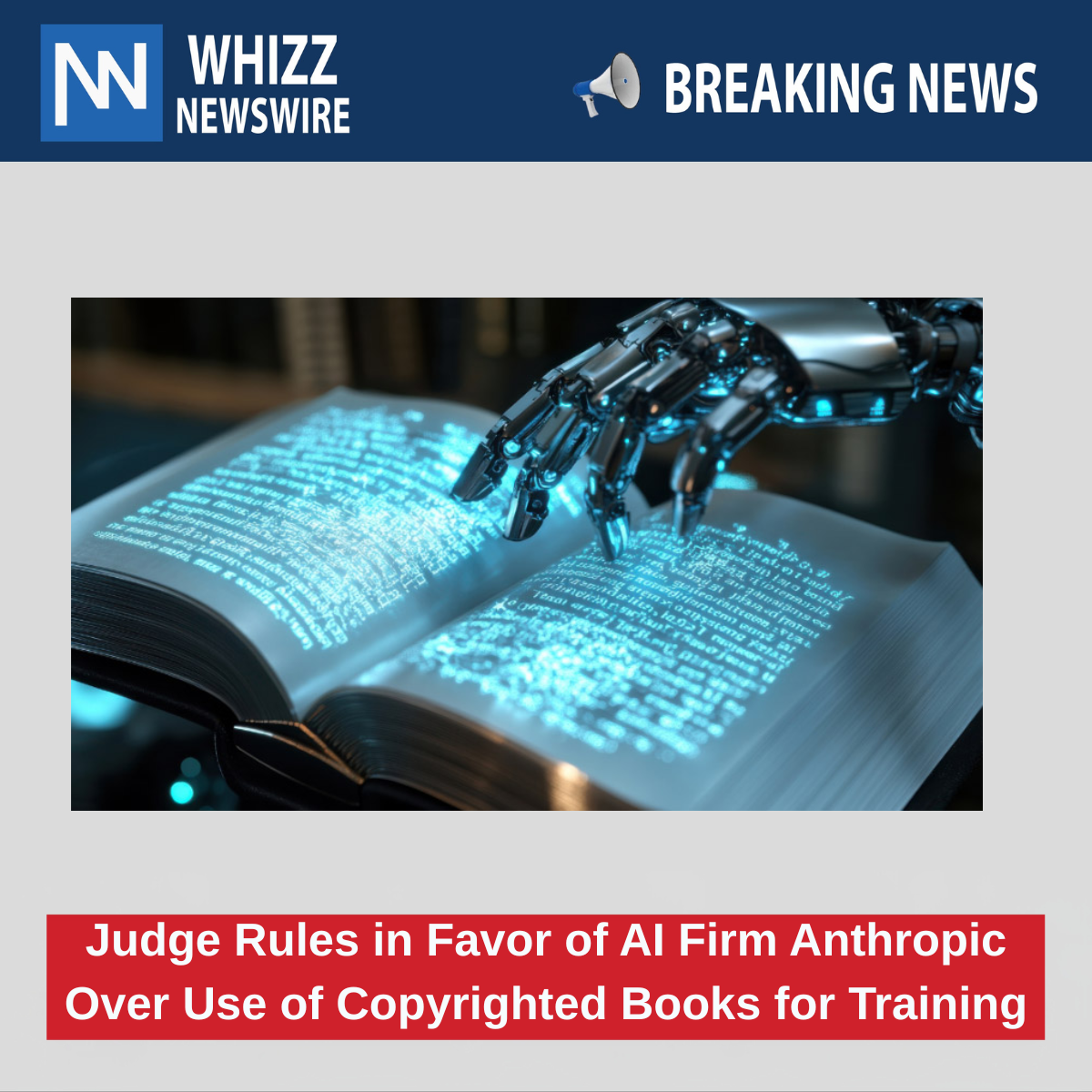
In a pivotal decision that could shape the future of artificial intelligence (AI) training practices, a U.S. federal judge has ruled that AI firm Anthropic did not violate copyright laws by using copyrighted books to train its Claude AI model. The decision, issued by Judge William Alsup, acknowledges that Anthropic’s use of the books was “exceedingly transformative” and qualifies as fair use under U.S. copyright law.
However, the ruling is not a complete win for Anthropic. The judge also determined that the company must face trial for allegedly storing pirated copies of copyrighted books in a central library used during the training process.
Authors Sued AI Firm Over Alleged Copyright Infringement
The lawsuit was initially filed in 2023 by three authors—Andrea Bartz, Charles Graeber, and Kirk Wallace Johnson—who accused Anthropic of using pirated versions of their works to train its language model Claude without consent or compensation. The authors claimed that this unauthorized use violated their intellectual property rights and fueled the growth of Anthropic’s multi-billion-dollar AI enterprise.
Key Authors Involved:
- Andrea Bartz, known for her best-selling thriller We Were Never Here
- Charles Graeber, author of The Good Nurse: A True Story of Medicine, Madness and Murder
- Kirk Wallace Johnson, author of The Feather Thief
Judge Recognizes Transformative Nature of AI Training
In his written opinion, Judge Alsup emphasized that the way Anthropic used the books was fundamentally different from the original purpose of the works. He noted that Anthropic’s large language model (LLM) did not attempt to replicate or plagiarize the authors’ content but rather used the material to “create something different.”
“Like any reader aspiring to be a writer, Anthropic’s LLMs trained upon works, not to race ahead and replicate or supplant them — but to turn a hard corner and create something different,” the judge wrote.
This reasoning underpins the judge’s approval of Anthropic’s fair use defense, which allows for limited use of copyrighted material for transformative purposes such as commentary, research, and education.
No Evidence of Direct Copying or Infringing Replicas
One of the factors that worked in Anthropic’s favor was the lack of evidence showing that the AI generated replicas of the authors’ books. Judge Alsup pointed out that the plaintiffs did not argue that Claude had created or distributed content identical—or even substantially similar—to their original works.
“If this training process reasonably required making copies within the LLM or otherwise, those copies were engaged in a transformative use,” the judge explained.
Had the authors presented evidence of direct content replication, the case may have taken a different legal direction.
Anthropic Still Faces Trial Over Use of Pirated Book Copies
While the judge accepted the transformative nature of the training, he did reject Anthropic’s request to dismiss the case altogether. He stated that the company may have violated copyright law by storing pirated copies of books in what the court described as a “central library of all the books in the world.”
This aspect of the case will now proceed to trial, where Anthropic could face damages of up to $150,000 per infringed work if found liable.
What Is Fair Use in AI Training?
This ruling is one of the earliest judicial opinions addressing a question that has become increasingly significant across the tech and publishing industries: Can AI companies legally train models using copyrighted materials?
Under the U.S. Copyright Act, the fair use doctrine permits the use of copyrighted works without permission under specific conditions, such as for transformative or educational purposes. The judge’s acceptance of fair use in this context sets a potential precedent for how large language models like Claude, ChatGPT, and others may legally learn from existing books, articles, and online content.
Growing Legal Pressure on AI Companies
The Anthropic lawsuit is just one of many legal challenges currently facing the AI industry. Major media companies, publishers, and artists are increasingly pushing back against what they view as unauthorized use of intellectual property by AI firms.
Recently, Disney and Universal filed lawsuits against the image-generation platform Midjourney, alleging piracy of visual assets. The BBC has also announced it is exploring legal options regarding the use of its content by AI models without licensing agreements.
In response to these challenges, some AI developers have begun striking licensing deals with content creators and publishers to access training data legally and ethically.
Anthropic Responds to Ruling
In a statement following the court’s decision, Anthropic expressed satisfaction with the recognition of its transformative use of copyrighted material but voiced disagreement with the decision to let the piracy claim go to trial.
“We’re pleased with the court’s understanding of how AI training works and its validation of our transformative use,” the company said. “However, we respectfully disagree with the ruling on the central library and look forward to presenting our case at trial.”
The Future of AI and Copyright: A Legal Grey Zone
As the AI industry evolves, so too does the legal framework that governs it. The court’s decision in this case offers early guidance on how courts may interpret fair use in the context of AI model training, but more definitive legal standards are still to come.
Legal experts predict that future lawsuits—particularly those involving replica content generation—will be crucial in drawing clearer lines around what constitutes fair use versus copyright infringement in the AI era.
For similar content visit here