
What is OLED?
OLED stands for Organic Light-Emitting Diode. Unlike LCD (Liquid Crystal Display), which requires a backlight to illuminate pixels, OLED displays are self-emissive — each pixel generates its own light. This means:
- Pixels can turn completely off, resulting in true blacks.
- Colors appear more vivid and vibrant.
- Displays can be thinner and more flexible.
OLED screens are built using organic molecules placed between two electrodes, where electric current excites the molecules to emit light.
The Evolution of Apple and OLED
For many years, Apple stuck with LCD Retina displays for their consistency, cost-effectiveness, and stability. However, consumer expectations began shifting toward more premium visuals seen in competitors’ OLED-equipped phones (like Samsung’s Galaxy series).
Here’s how Apple transitioned:
iPhone
- 2017 – iPhone X: First iPhone with OLED. It featured the “Super Retina” display, marking a leap in contrast and display sharpness.
- 2018 – iPhone XS/XS Max: More refined OLED with better color accuracy and energy efficiency.
- 2019 – iPhone 11 Pro/Pro Max: Brighter OLED displays with better HDR.
- 2020 – iPhone 12 Series: OLED became standard in all models, including base iPhone 12 and mini.
- 2021–2023 – iPhone 13, 14, 15: Introduced ProMotion (120Hz) displays in Pro models, LTPO OLED for dynamic refresh rate.
- 2024 – iPhone 16 (expected): Enhanced OLED, possibly with under-display Face ID and improved brightness.
Apple Watch
- From the first generation (2015), Apple Watch has used flexible OLED panels.
- Apple was the first to introduce an Always-On Display using low-refresh OLED in Series 5.
- Future models are expected to use microLED, but OLED remains standard for now.
iPads and OLED
- Apple used mini-LED in the 12.9-inch iPad Pro (2021).
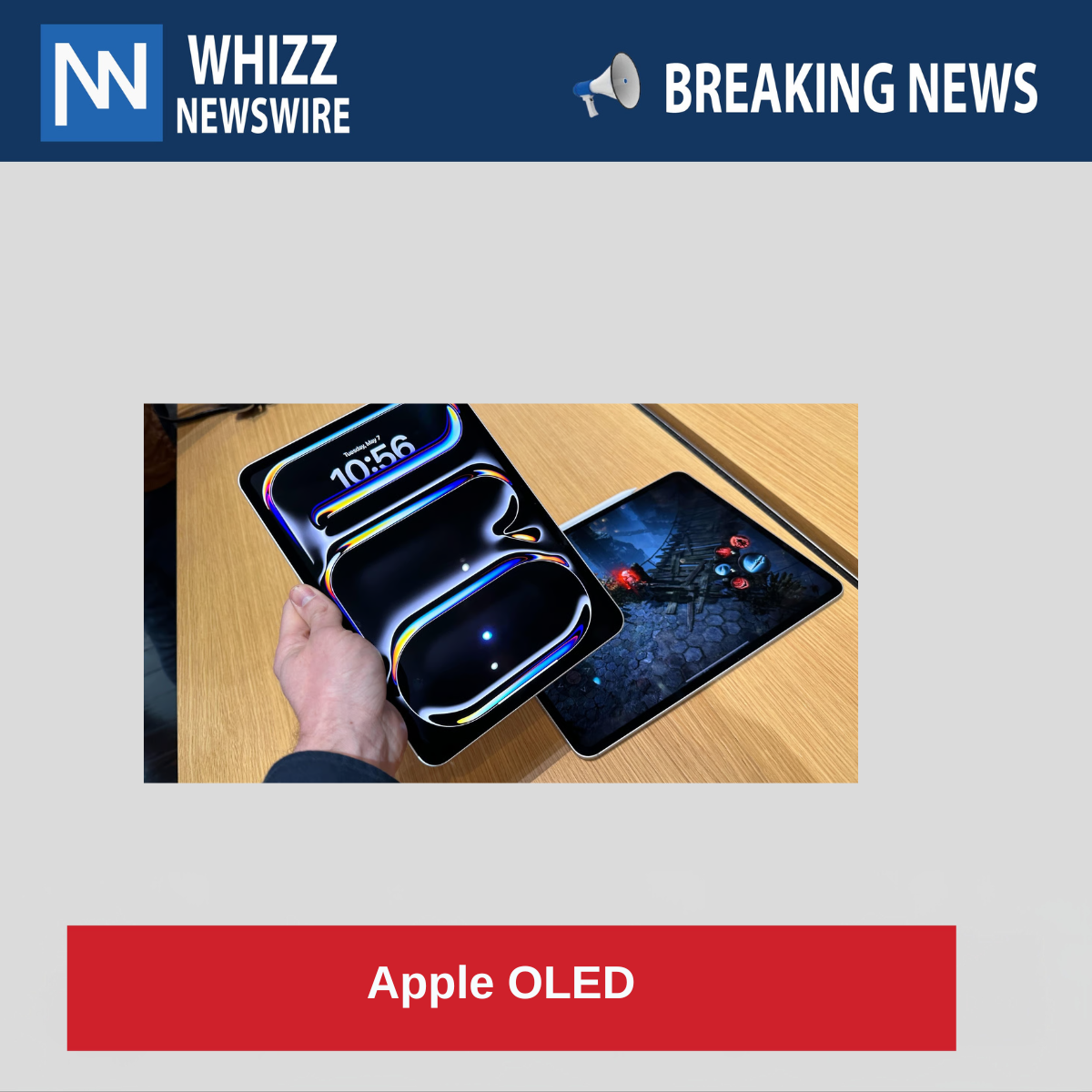
- However, in 2024, Apple introduced OLED displays in 11-inch and 13-inch iPad Pro models:
- These use tandem OLED (dual-layer structure) for better brightness, contrast, and lifespan.
- Thinner and more energy-efficient compared to mini-LED.
- These use tandem OLED (dual-layer structure) for better brightness, contrast, and lifespan.
MacBooks (Coming Soon)
- Apple is reportedly working with suppliers to bring OLED displays to MacBook Air and Pro models by late 2025 or 2026.
- Expect 14-inch and 16-inch MacBook Pros with OLED, bringing:
- Thinner bezels
- Better HDR
- Improved battery performance
- Potential for touchscreens (though Apple has historically avoided this in Macs)
- Thinner bezels
Apple’s OLED Display Technology
Apple doesn’t just use standard OLED. It enhances the tech with its own calibration and naming systems:
| Term | Description |
| Super Retina | OLED display with high pixel density and color precision |
| Super Retina XDR | Advanced OLED with high brightness (up to 1600 nits HDR) |
| ProMotion | 120Hz adaptive refresh for smoother scrolling |
| LTPO (Low-Temperature Polycrystalline Oxide) | Allows dynamic refresh from 1Hz to 120Hz for power savings |
OLED vs LCD in Apple Products
| Feature | OLED | LCD |
| Black Levels | True black | Backlight bleeds light, blacks look gray |
| Contrast Ratio | Infinite | Limited |
| Power Efficiency | More efficient with dark UI | Always-on backlight consumes more power |
| Thickness | Thinner displays | Thicker due to backlight |
| Viewing Angles | Superior | Decent, but colors shift |
| Color Accuracy | Vivid and customizable | Natural, but slightly less punchy |
Apple’s switch to OLED in iPhones and Watches was driven by visual quality, power efficiency, and the demand for premium display experiences.
OLED Suppliers for Apple
Apple relies on multiple display manufacturers:
- Samsung Display
- Primary supplier for iPhone OLEDs.
- Supplies LTPO OLED for iPhone Pro models.
- Primary supplier for iPhone OLEDs.
- LG Display
- Supplies Apple Watch OLEDs.
- Recently expanded capacity to provide OLED for iPads.
- Supplies Apple Watch OLEDs.
- BOE (China)
- Supplies OLED panels for budget iPhone models.
- Apple is increasing reliance on BOE to diversify supply chains and reduce costs.
- Supplies OLED panels for budget iPhone models.
Future of OLED in Apple Ecosystem
Apple has a strong roadmap:
Foldable OLED Devices
- Apple is reportedly testing foldable OLED iPhones and iPads.
- Launch may be 2026 or later, depending on durability and design challenges.
Tandem OLED in iPads
- Introduced in 2024 iPad Pro, dual OLED layers improve:
- Brightness (over 1600 nits peak HDR)
- Longevity (mitigating OLED burn-in)
- Efficiency (less power to reach same brightness)
- Brightness (over 1600 nits peak HDR)
MicroLED (Future Tech)
- Apple acquired microLED tech companies.
- Plans to replace OLED with microLED eventually (likely Apple Watch Ultra first).
- Benefits of microLED: no burn-in, higher brightness, more energy efficiency.
Key Benefits for Consumers
- Better Visuals: True blacks, high contrast, vibrant colors
- Energy Saving: Especially with dark mode and LTPO
- Slimmer Devices: OLED allows for thinner and lighter product design
- Smooth Experience: ProMotion OLEDs provide fluid motion and dynamic refresh rates
- HDR Content: Better viewing for movies and games
Strategic Significance for Apple
Apple’s OLED investments align with its broader goals:
- Vertical integration of technology
- Longer battery life and sustainability
- Premium design consistency across devices
- Differentiation from Android competitors
With OLED now common across iPhone, Apple Watch, and iPad Pro and soon Macs Apple is creating a unified, high-performance display experience for its ecosystem.
For similar content visit here