
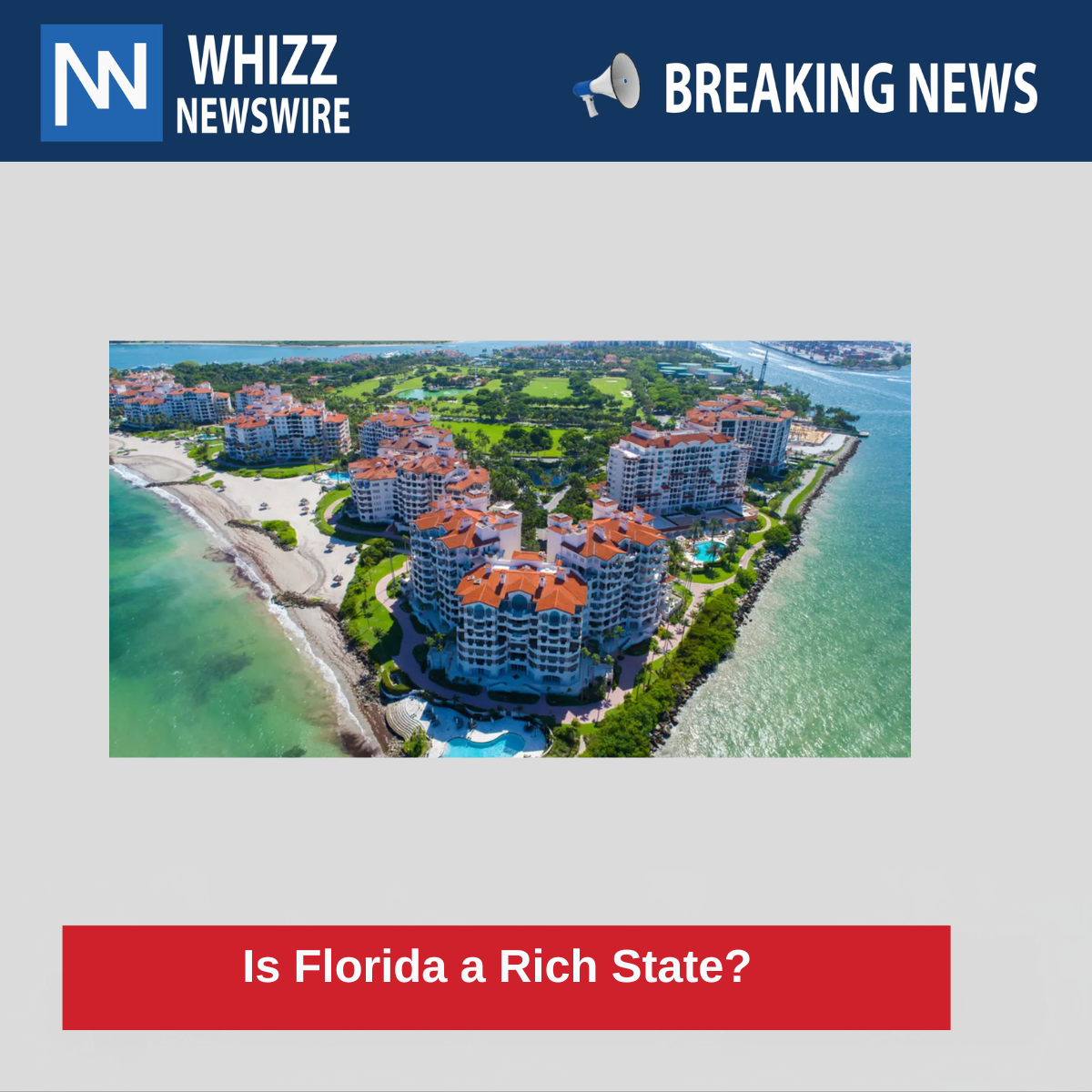
When people think of Florida, images of sun-soaked beaches, luxury yachts in Miami, and multi-million-dollar waterfront mansions in Palm Beach often come to mind. With celebrities, billionaires, and retirees flocking to its shores, many wonder: Is Florida really a rich state?
On the surface, Florida looks incredibly wealthy and in many ways, it is. But look a little closer, and a more complex picture emerges, one where immense prosperity coexists with high inequality, underpaid workers, and a high cost of living.
Let’s unpack the full truth.
Florida’s Economy: Big, Booming, and Powerful
1. A GDP Powerhouse
Florida boasts one of the largest state economies in the United States. As of 2024, its Gross Domestic Product (GDP) exceeds $1.5 trillion, making it the fourth-largest economy in the U.S., after California, Texas, and New York.
To put that in perspective, if Florida were a sovereign country, it would rank among the top 20 economies in the world surpassing nations like the Netherlands, Saudi Arabia, and Switzerland.
2. Diverse Economic Engines
Florida’s economic success doesn’t rest on just one sector. It thrives in several key industries:
- Tourism: Walt Disney World, Universal Studios, cruise ports, and world-class beaches make Florida a global tourist magnet.
- Real Estate: Booming property markets in Miami, Orlando, and Tampa have drawn investors from around the world.
- Finance & Trade: Miami is a financial hub for Latin America, with strong banking, trade, and logistics sectors.
- Agriculture: Florida is the nation’s largest producer of oranges and among the top in sugar, tomatoes, and other crops.
- Aerospace & Tech: Cape Canaveral and companies like SpaceX and Boeing contribute to Florida’s growing tech sector.
Conclusion: Florida is undeniably rich in total economic output, innovation, and industry growth.
Wealthy Cities and Billionaire Enclaves
Florida is home to some of the richest ZIP codes in America. Areas like:
- Palm Beach
- Naples
- Fisher Island (Miami)
- Key Biscayne
- Boca Raton
…are havens for the ultra-wealthy. Billionaires like Jeff Bezos, Ken Griffin, and Tom Brady own homes or investments here. Some communities have average home prices in the millions, exclusive country clubs, and luxury car dealerships lining the streets.
Miami’s Brickell neighborhood has even been dubbed “Wall Street South” for its influx of finance and tech firms.
So yes Florida does have extreme wealth.
But What About the Average Floridian?
Here’s where the answer becomes more nuanced.
1. Median Income is Below National Average
Despite its enormous GDP, Florida ranks below the national average when it comes to median household income:
- Florida median income (2024): ~$67,000
- U.S. national average: ~$75,000
- California: ~$85,000
- New York: ~$78,000
This means that while the state may be rich in total, many Floridians earn less than residents in other top states.
2. Service-Based Workforce
Florida’s economy is heavily service-based. Millions of jobs are in:
- Hospitality (hotels, restaurants, tourism)
- Retail
- Construction
- Healthcare
- Theme parks and entertainment
While these sectors are vital, many of these jobs are low-wage, with limited benefits and seasonal hours. For example:
- A hotel housekeeper in Orlando may earn $15/hour
- A theme park employee might work two jobs to make ends meet
- Agricultural workers often earn below the poverty line
So while wealth is present, it’s not evenly distributed.
The Housing Crisis and Cost of Living
Florida’s popularity has driven up demand and housing prices have skyrocketed:
- Miami’s median home price: ~$580,000
- Naples: ~$750,000
- Orlando: ~$400,000+
- Tampa: ~$420,000+
In many parts of Florida, wages haven’t kept pace with rising costs. As a result:
- Renters struggle to afford apartments, especially in tourist cities.
- Homeownership is out of reach for many working-class families.
- Insurance rates are among the highest in the country (especially homeowners and flood insurance).
Income Inequality: A Growing Divide
Florida has one of the highest income inequality levels in the country, according to U.S. Census data. The wealth gap between the richest 10% and the bottom 50% has widened dramatically in the past decade.
- The top 1% in Palm Beach County earn over $1 million/year
- In contrast, the bottom 50% in rural counties earn less than $30,000/year
Why this matters: Even though the state’s average wealth is high, that average is skewed by extreme wealth meaning most residents do not share in the prosperity.
Retiree Wealth Skews the Picture
Florida is famously a retirement haven, attracting millions of older Americans, many of whom are:
- Wealthy
- Financially stable
- Receiving pensions, Social Security, and investment income
Their presence boosts the state’s wealth indicators, but doesn’t reflect the earning power of younger working families.
Advantages That Attract the Wealthy
Despite these challenges, Florida remains attractive for high earners and investors:
- No state income tax
- Warm weather year-round
- Business-friendly environment
- Low regulatory barriers
- Luxury lifestyle options
These factors explain why so many corporations and billionaires are relocating to Florida even if the average worker isn’t sharing fully in the prosperity.
Final Verdict: So, Is Florida a Rich State?
Yes, Florida is rich if you measure by:
- Total economic output (GDP)
- Wealthy enclaves and billionaire migration
- Booming real estate, tourism, and trade sectors
- Government revenue and investment opportunities
But Florida is not rich for everyone, because:
- Median income is below average
- Cost of living is rising rapidly
- Many workers are underpaid
- Income inequality is among the highest in the U.S.
- Many counties (especially rural areas) are still economically struggling
Conclusion: A Tale of Two Floridas
Florida is a state of contrasts where billionaires live in luxury skyscrapers a few miles away from working-class families who can’t afford rent. It’s a land of opportunity and sun, but also one of complexity and inequality.
So is Florida a rich state?
Yes but not equally.
Whether it remains a land of shared prosperity or growing economic division depends on how leaders, communities, and businesses choose to shape its future.
For similar content visit here