
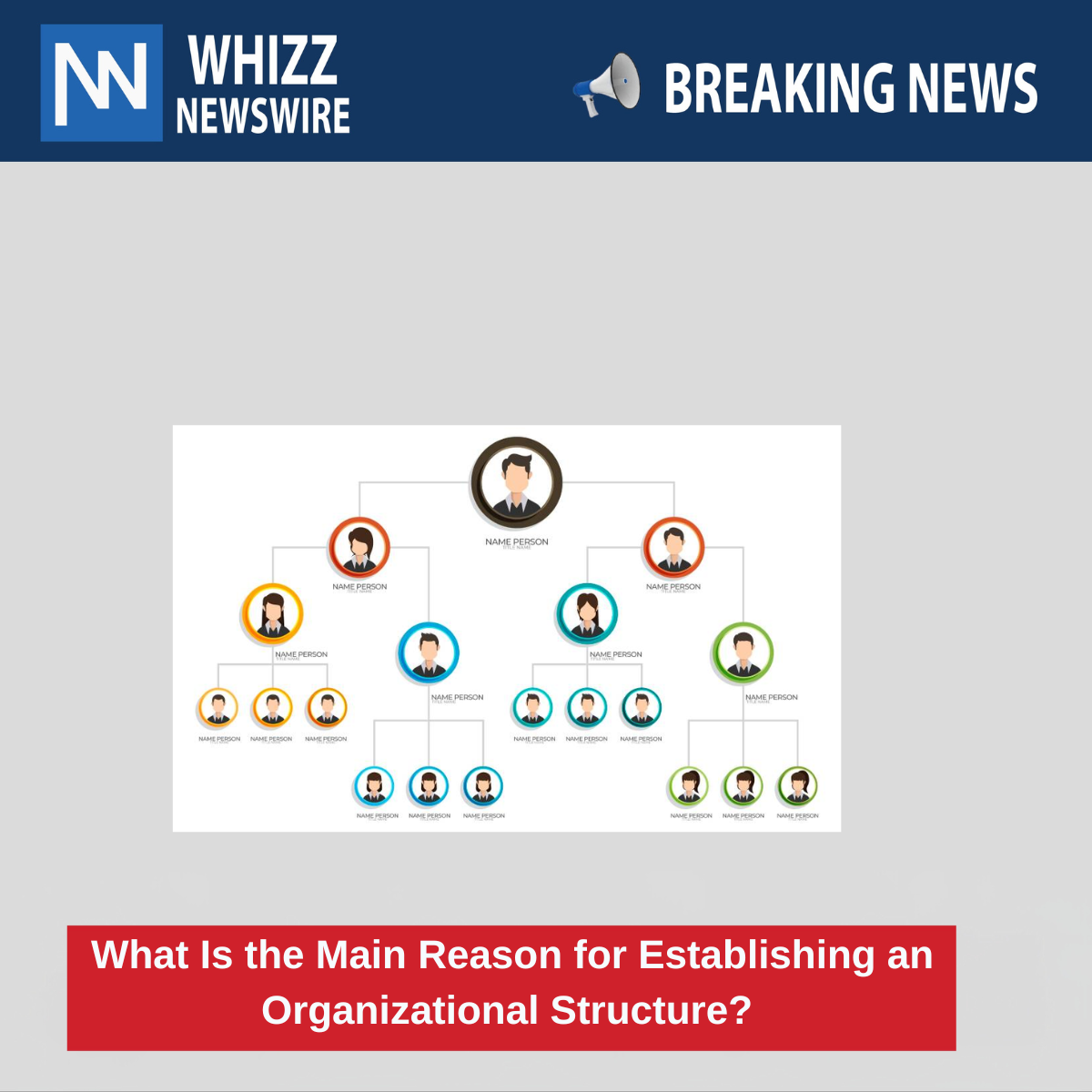
The main reason for establishing an organizational structure is to ensure efficiency, clarity, coordination, and accountability in how work is managed and goals are achieved within an organization. Without structure, even the best business ideas and teams can struggle with confusion, miscommunication, and inefficiency.
Why Organizational Structure Matters
1. Clarifies the Chain of Command
Organizational structure establishes a clear hierarchy of authority, meaning:
- Who makes decisions
- Who reports to whom
- Who is responsible for what
This prevents confusion and ensures that employees understand their place in the organization, their superiors, and the expectations for their role. For example:
In a hospital, a nurse reports to a charge nurse, who reports to a doctor, who reports to a department head. Clear structure avoids chaos in life-saving decisions.
2. Improves Communication and Information Flow
A formal structure sets clear pathways for communication:
- Top-down communication: Management passes instructions and strategies downward.
- Bottom-up communication: Employees can share feedback or issues with supervisors.
Without this, information could get lost, duplicated, or misunderstood. In large corporations or teams, communication breakdown can lead to missed deadlines or critical errors.
3. Facilitates Coordination Between Departments
Most companies have multiple departments (e.g., marketing, sales, finance, operations). A defined structure ensures:
- Each department knows its scope and boundaries
- There’s a way to collaborate on shared projects
- Teams aren’t stepping on each other’s toes
For example:
Marketing launches a campaign → Sales follows up on leads → Finance tracks ROI. All departments need coordination, and that only happens smoothly with a strong structure.
4. Supports Growth and Expansion
A well-designed structure allows businesses to scale efficiently:
- Add new roles or departments without disrupting workflow
- Distribute responsibilities as more people join
- Keep operations consistent and effective as the business grows
Without structure, growth often leads to overlapping roles, confused responsibilities, and a lack of strategic direction.
5. Enhances Accountability and Performance Management
In a structured organization:
- It’s easier to track who is responsible for what
- Managers can monitor team performance
- Underperformance or excellence can be addressed properly
If something goes wrong, you can pinpoint the source, correct it, and improve. This motivates employees to take ownership of their work.
6. Encourages Specialization and Efficiency
By dividing work into departments or roles:
- Employees become specialists in their areas
- They develop deeper expertise
- This leads to higher productivity and better-quality results
For example:
HR focuses only on hiring and employee relations. IT focuses on systems and security. Finance handles budgets. Each team gets better at what they do.
7. Aligns Everyone With Organizational Goals
Structure connects daily tasks with big-picture goals. Each team or role:
- Contributes to company objectives
- Understands how their work fits into the vision
- Stays focused on priorities rather than distractions
A structured environment helps ensure that everyone is rowing in the same direction.
8. Speeds Up Decision-Making
With defined roles and authority:
- Managers can make decisions without waiting for higher-level approval
- Employees know when to escalate issues and when to act
This saves time and keeps operations moving quickly, especially important in fast-paced industries.
9. Reduces Conflicts and Confusion
When roles, authority, and responsibilities are clear:
- There’s less overlap in duties
- Fewer disputes over decision-making
- Employees focus on their own tasks rather than stepping into others’ lanes
Structure acts as a set of rules and boundaries, reducing workplace friction.
Summary
| Purpose | Impact |
| Clarify authority | Everyone knows who to report to |
| Improve communication | Information flows efficiently |
| Coordinate across departments | Teams work together smoothly |
| Support growth | Scale the business without chaos |
| Increase accountability | Easier to track and manage performance |
| Promote specialization | Boosts productivity and skill development |
| Align with goals | Daily tasks reflect strategic objectives |
| Accelerate decision-making | Empowered managers take quick, informed action |
| Minimize conflicts | Clear roles prevent misunderstandings and disputes |
For similar content visit here