
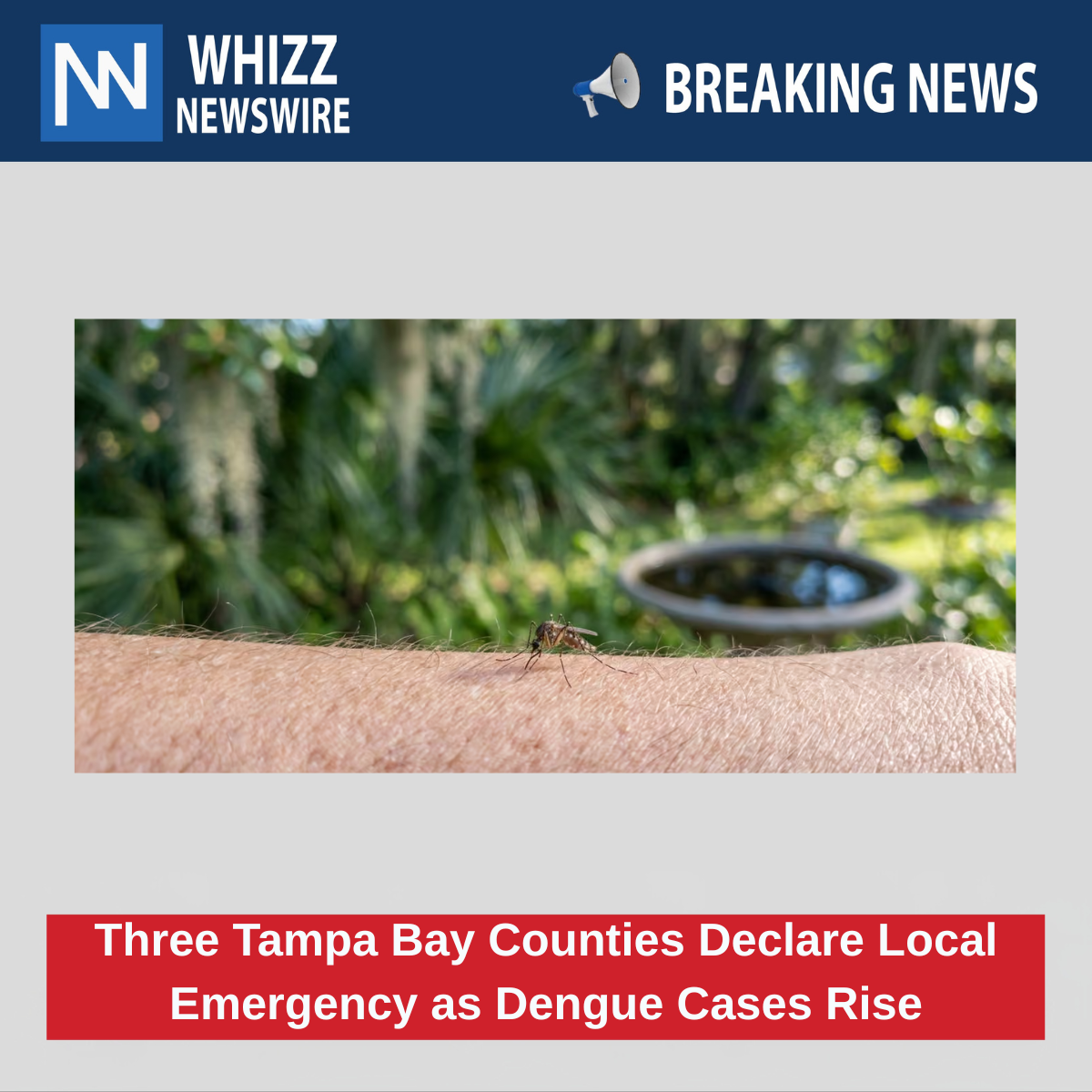
A state of emergency declared at the local level grants county administrators and emergency managers special powers which enable them to act swiftly.
What the Emergency Declarations Allow
- Do not impose the usual delays when approving emergency funds for mosquito surveillance, spraying and public education.
- It will be easier to co-ordinate with state agencies and it may be possible to get reimbursement for the response costs.
- Omit some standard procedures in order to speed up the aerial and ground treatments in the affected neighborhoods.
Each of the three declarations is originally set to last for seven days and can then be extended or withdrawn depending on how the outbreak develops.
Dengue Case Counts in the Tri-County Area
The Florida Department of Health states that in 2026 over 150 cases of dengue acquired locally have been reported throughout the state, the majority of them being in the Tampa Bay area. By mid-September:
- Hillsborough County: 134 confirmed cases, including 36 reported during the week of Sept. 13 to 19
- Pinellas County: 7 confirmed cases
- Pasco County: 2 confirmed cases
Health authorities publish revised figures on a weekly basis, which means that the number of cases is to be expected to vary as testing and reporting go on.
Mosquito-Control Response: Aerial Spraying and Surveillance
The counties are increasing their ground and aerial mosquito control activities.
Hillsborough County Mosquito Management Services has been carrying out nighttime helicopter applications of adulticide (Dibrom) in order to reduce the number of adult mosquitoes in a number of areas including South Tampa, East Tampa, Seminole Heights, Bloomingdale, Riverview and others.
Specialised helicopter teams also carry out operations aimed at targeting mosquito larvae in standing water in central Tampa and in the surrounding areas, with the Pasco County Mosquito Control District helping out as part of a coordinated regional response.
Residents in Hillsborough have the option of registering for notifications regarding the locations and times of aerial treatments, and the county provides an online map that shows the treatment areas.
What Residents Can Do to Reduce the Risk of Dengue
Dengue is transmitted by Aedes mosquitoes, which mainly bite during the day but may also be active at night. Health officials are advising people to take the following actions in order to protect themselves and their families:
- Get rid of any water that has collected around houses and businesses by emptying flowerpots, buckets, pet bowls, old tyres and all other things capable of holding rainwater.
- When you are outdoors, cover your exposed skin with long sleeves and pants.
- You should use a mosquito repellent that is registered with the EPA as instructed on the label. Repellents containing DEET, picaridin, IR3535 or lemon eucalyptus oil are recommended.
- Keep screens on doors and windows, and fix them if needed, to keep mosquitoes out.
- You should be careful about bites both during the day and in the evening.
The best ways to slow down the spread of dengue are to get rid of mosquito breeding places and to prevent bites.
Dengue Symptoms and When to Seek Care
Dengue fever may cause a high fever, severe headache, pain behind the eyes, joint and muscle pain, a rash and slight bleeding, for example, from the nose or gums.
Although most individuals regain their health within a week, in some cases the disease develops into severe dengue, a condition which can be fatal and demands urgent medical treatment.
If you think that you may have dengue, get in touch with your healthcare provider and do not take aspirin or ibuprofen until dengue has been ruled out since these medicines can raise the risk of bleeding; rest, fluids and acetaminophen are usually advised to alleviate the symptoms.
Where to Find More Information
For the latest updates, treatment-zone maps and prevention tips, residents can visit:
- Pasco County Mosquito Control District
- Florida Department of Health in Pasco, Hillsborough and Pinellas counties
- Hillsborough County Mosquito Management Services for aerial treatment schedules and alerts
Cooperation Needed to Reduce Dengue Cases
Since the outbreak is ongoing, officials have stated that cooperation among the local governments, mosquito-control districts, and the public will be essential to reducing the number of cases and safeguarding the Tampa Bay community.