
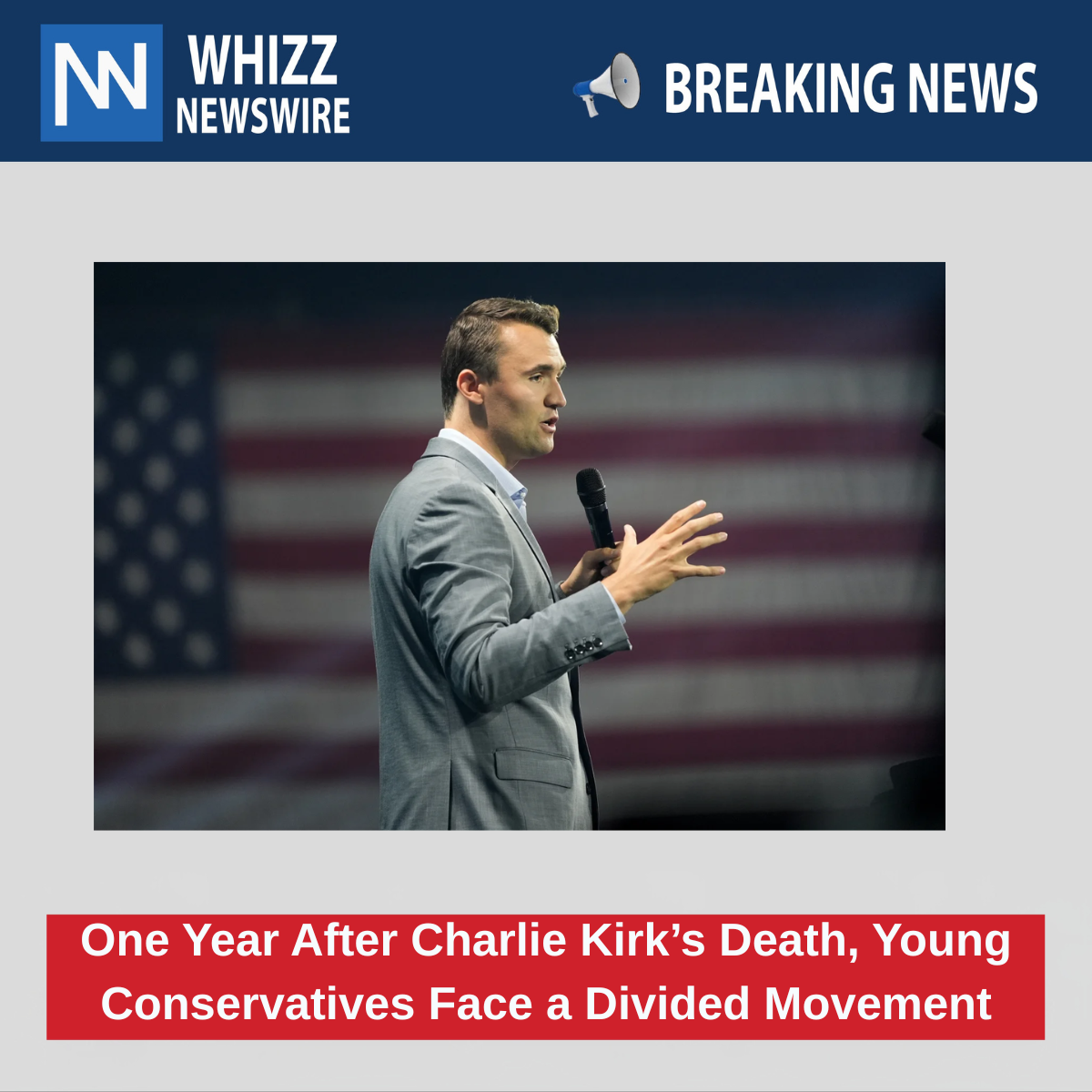
A year after Charlie Kirk was fatally shot on a Utah college campus, the conservative youth movement he helped build is larger than ever—but also more fractured. Turning Point USA has added thousands of new chapters and says more than a million students are now involved. Yet many young conservatives describe a movement still searching for its next unifying voice, grappling with internal rifts and growing frustration with party leaders.
A Surge of Energy Then a Reality Check
In the days after Kirk’s assassination, Turning Point reported a wave of interest from students wanting to start chapters. His widow, Erika Kirk, quickly took the helm as CEO and framed the moment as an awakening. “If you thought that my husband’s mission was powerful before, you have no idea,” she said in early remarks. “You have no idea what you’ve just unleashed.”
The numbers back up part of that story. Turning Point says it saw “unprecedented expansion” in the 2025–2026 school year, with roughly 1,500 college chapters—up 64%—and about 3,500 high school “Club America” clubs, nearly triple the prior count. Attendance at its Chapter Leadership Summit reportedly doubled, with more than two‑thirds of attendees saying they got involved after Kirk’s death.
But growth hasn’t erased the sense of loss. For many student organizers, Kirk’s presence was the glue that held different strands of the movement together. “Charlie was the glue that held us together,” said one campus leader, echoing a common refrain: without him, the coalition feels less cohesive and more prone to infighting.
Leadership Without Charlie: Erika Kirk and the Search for a New Voice
Erika Kirk’s appointment as CEO came just days after her husband’s death. Colleagues credit her with stabilizing the organization and pushing new initiatives, including a stronger faith‑focused outreach. Turning Point has continued campus tours, though events have drawn mixed turnout compared with Kirk’s “Prove Me Wrong” debates, which were central to his brand as a free‑speech provocateur willing to engage opponents directly.
Inside the movement, some argue no single figure has yet matched Kirk’s connection to Gen Z conservatives. “He knew—because he was so plugged in—what bugged young people, what needed to be addressed,” said a recent college graduate who previously led a campus chapter. That direct pipeline, they say, made young supporters feel heard in a way that’s harder to replicate now.
Fractures Within the Right: Policy Fights and Falling Approval
The divisions go beyond personality. Young Republicans are increasingly at odds with older party leaders on several high‑profile issues. Polling over the past year shows a sharp drop in approval of President Trump among voters under 35, with many citing the Iran conflict and the administration’s stance toward Israel as major tension points. Surveys also show younger conservatives hold less favorable views of Israel and are more skeptical of extended military action than older generations.
For some student activists, that disaffection is reshaping how they organize. One chapter leader said he now tries to focus conversations on campus issues students care about rather than defending the White House. “Some of this stuff is just infuriating, and you can’t defend any of it,” he said. “I don’t even try anymore.”
Conspiracy Theories and Credibility Challenges
Another drag on momentum: conspiracy theories about Kirk’s assassination. Over the past year, unfounded claims—amplified by some right‑wing influencers—have suggested an inside job or foreign involvement. Law enforcement evidence, including surveillance footage, ballistics and DNA, has not supported those theories, but the rumors have still seeped into campus climates.
Student organizers say the fallout is real. “The conspiracies revolving around Charlie Kirk’s assassination have really tanked the credibility of Turning Point,” said a Georgia State University chapter president. He described encounters with students who are fans of certain podcasters and are hostile toward Turning Point because of the rumors.
Growth on Paper, Uncertainty on the Ground
Turning Point insists the movement is stronger than ever. A spokesman acknowledged “a confluence of challenges” but said the organization is “still growing in nearly every conceivable way,” pointing to chapter counts, renewals and summit attendance. Internal memos cite sharp year‑over‑year increases in chapter renewals and say more than a million students are involved across high school and college programs.
Yet on some campuses, enthusiasm has cooled. “I would say the interest in conservative organizations is low right now, even if it did rebound when Charlie Kirk got shot,” said a University of Richmond junior who leads a chapter. He cited frustration with the Trump administration and the absence of Kirk’s draw as reasons momentum has slowed.
What Comes Next for the Movement Kirk Built
As the one‑year anniversary passes, Turning Point is marking the date with memorial events and a push into the midterms, while also signaling a longer‑term focus on 2028 and beyond. The test ahead is twofold: sustain the organizational growth achieved since Kirk’s death and rebuild a sense of unity among young conservatives who feel pulled in different directions by policy fights, leadership questions and online misinformation.
For students like the ones who rushed to start chapters after the shooting, the mission remains personal. “I feel like there were many of us who had that wake‑up call,” said one organizer. The question now is whether the movement can channel that energy into a coherent vision without the figure who once anchored it.