
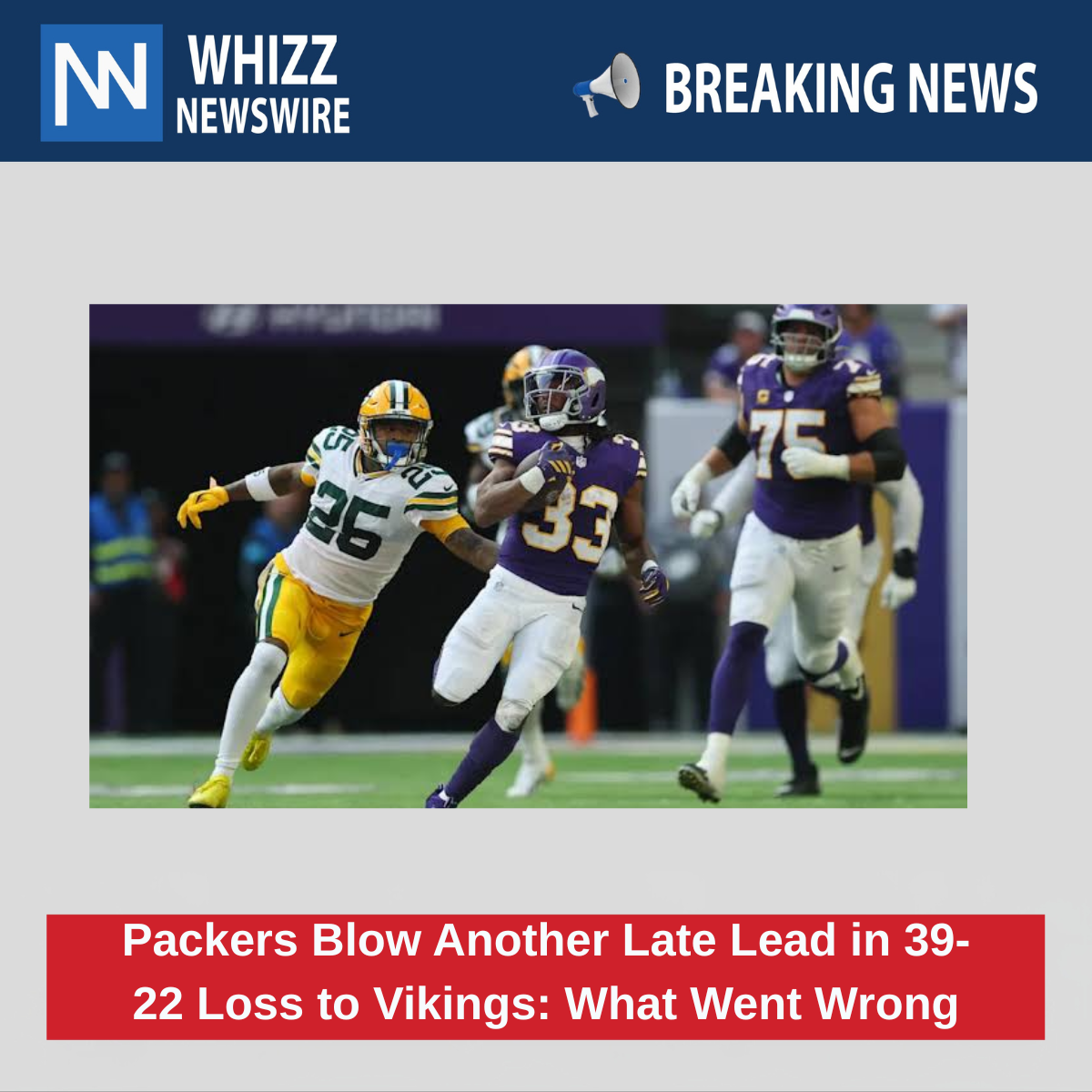
The Green Bay Packers began the 2026 season with another familiar ordeal. Having established a double-digit advantage in the second half, they allowed 29 points without reply and ended up with a 39-22 defeat at U.S. Bank Stadium against the Minnesota Vikings on Sunday. This marks the sixth consecutive loss for Green Bay when including the playoff games—and it is the fourth instance in that period that they have blown a lead of more than one touchdown.
Strong Start, Fragile Finish
The Packers were in a strong position right from the start. The score was 22 to 10 in the third quarter and 22 to 17 early in the fourth. Rookie kicker Trey Smack extended the lead to eight points with a 40-yard field goal at 13:17. However, after the Vikings were penalised for offside, head coach Matt LaFleur chose to go for it on fourth and one rather than kicking the field goal. The risk did not pay off since Jordan Love was halted by a quarterback sneak and Minnesota then gained the upper hand.
From that moment onwards the Packers’ offensive efforts ground to a halt and their defence broke down. The Vikings scored 22 points to nothing in the fourth quarter and 29 to 3 in the second half, changing what had been a modest deficit into a massive victory.
Jordan Love’s Big Night, Costly Errors
Although Jordan Love had a high output he was unable to win the game; he completed 21 of 42 passes for 387 yards and two touchdowns, both going to Christian Watson, but was sacked four times, lost a fumble and threw an interception late on. The Vikings’ pass rush was continuous and achieved a pass-rush win rate of 90.6 per cent, the highest in a single game since 2022, according to NFL Next Gen Stats.
“As all these games manage to get close at the end,” Love said, “we have to find ways of performing at our best. We’ve kept on talking about it, and I believe we’ll carry on doing so until we work out a solution and take action.”
Penalties and Missed Chances Pile Up
Stop as they might have been in Green Bay, the penalties nullified them. Penalties for illegal contact against the safety Javon Bullard and for roughing the passer against the rookie defensive tackle Chris McClellan went on to extend the Vikings’ important drives. The interception in the end zone by the safety Evan Williams was cancelled out by defensive holding on Xavier McKinney.
“We shouldn’t have left it with the ref, and that’s exactly what we did,” said cornerback Keisean Nixon.
Tucker Kraft, a tight end, attributed the mistakes to his own actions. “Either you call the wrong play and as a result the players end up in the wrong positions or you call the correct play and yet someone fails to carry out their duties,” he said. “It’s just the result of a number of errors, and each player has to take responsibility for correcting them… The only team that can beat us are we ourselves.”
LaFleur’s “Finish” Mantra Meets Hard Reality
Matt LaFleur made finishing the thing his theme for the off-season—he wanted to finish each drill, finish each play, and finish the games. On Sunday, however, the Packers couldn’t.
According to LaFleur, it’s going to be a subject of discussion among all of you until we actually do it, which is the bottom line.
The pattern is difficult to ignore. In three of its five most recent games, Green Bay has lost after leading in the fourth quarter, including in the playoffs. Of the six losses in the current sequence, three have been against teams from the NFC North, and the way the losses have occurred—through late collapses—has become a story that tends to follow the team from one city to another.
Edgerrin Cooper, a linebacker, expressed the urgency by saying, “We need to work this out as soon as possible. We have to take what we did on the field, make the corrections that are necessary and get ready for next week.”
What’s the future holding for Green Bay?
The Packers are going back home with one clear instruction: turn all the talk about ‘finishing’ into actual results. This involves cleaner performance on third down, fewer penalties that end drives, better protection for Love when there are heavy blitzes, and a defence that is able to secure games without breaking down in the last minutes.
Until such a thing occurs, the question will be the same and will become louder every week: how are the Packers to prevent them from turning strong starts into their usual collapses?