
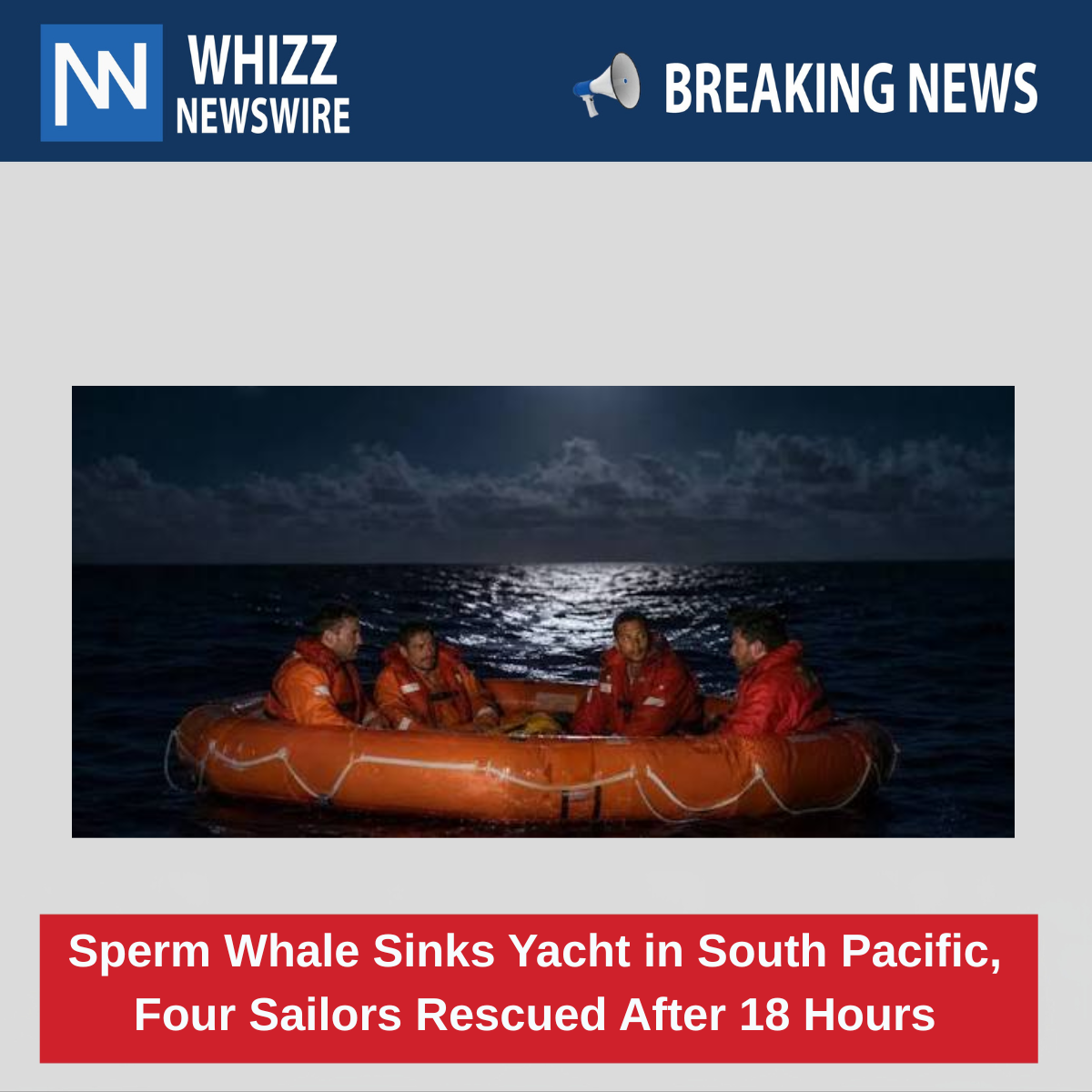
A peaceful sailing trip across the South Pacific turned into a fight for survival after a sperm whale struck a yacht, damaging its hull and leaving four crew members stranded in the open ocean.
The incident happened over the weekend when the 52-foot yacht Tai Tam encountered a pod of sperm whales about 250 nautical miles north of Norfolk Island. The collision caused serious structural damage, leaving the vessel unable to steer and allowing water to pour inside.
Australian sailor Jemma Cooper was at the steering wheel when the impact occurred. She described hearing a loud thud that pushed the entire yacht sideways and threw her away from the controls.
At first, the crew did not understand what had happened. However, after noticing a brown discoloration in the water, they spotted a group of six to eight sperm whales alongside the yacht.
Jemma’s husband, Jeremy Cooper, was sleeping below deck when the collision woke him. He quickly realized the situation was serious.
The impact had damaged the steering equipment on the starboard side and caused significant water to enter the vessel.
Yacht Crew Declares Mayday as Water Floods In
Around 30 minutes after the collision, at approximately 1 p.m. New Zealand time on Saturday, the crew activated their emergency beacon and issued a full mayday call.
The damage was extensive. According to French crew member Martin Jaffre, the whale had left several large openings in the hull and cracked the fiberglass structure. The steering system was also broken, making it impossible to control the yacht.
With water continuing to enter, the sailors worked together to keep the vessel afloat. They used whatever materials were available, including expansion foam, to slow the flooding.
Jaffre even swam underneath the yacht to inspect the damage. Meanwhile, the other crew members continued removing water by hand and tried to prevent debris from clogging the engine.
The Royal New Zealand Air Force dispatched a P-8A Poseidon patrol aircraft to the area. Its crew helped establish radio communication and coordinate the rescue operation.
Sailors Abandon Yacht During the Night
Despite their efforts, the crew eventually realized they could no longer keep the yacht afloat.
Late Saturday night, they made the difficult decision to abandon the vessel and move into a life raft. Conditions were relatively calm, and a full moon provided some visibility as they transferred their belongings and supplies.
By early Sunday morning, the sailors became concerned that the damaged yacht could pull their life raft underwater. They decided to cut the connecting line and move away from the sinking vessel.
Shortly afterward, the Tai Tam disappeared beneath the ocean.
The four sailors were left waiting for help in the open South Pacific, nearly 18 hours after the initial collision.
Container Ship Rescues All Four Crew Members
Help finally arrived at approximately 6 a.m. Sunday when the 470-foot container ship MV Sofrana Surville reached their location.
The approaching vessel was enormous compared with the small life raft, making the rescue itself a frightening experience for the stranded sailors.
However, the crew successfully climbed a ladder onto the container ship. Within about 30 minutes, they were safely aboard, where they received coffee and spoke with the ship’s captain.
All four sailors survived without loss of life.
Jeremy Cooper described the experience as wonderful because they had been rescued, but said the incident brought a terrible end to their Pacific holiday voyage.
The New Zealand military confirmed the rescue and praised both the response team and the yacht’s crew for their actions.
Rescue Officials Highlight Importance of Emergency Preparation
Mike Clulow, Operations Manager at New Zealand’s Rescue Coordination Centre, described the operation as well coordinated and praised the sailors for responding appropriately.
He particularly highlighted their decision to activate the Emergency Position-Indicating Radio Beacon (EPIRB) early in the incident.
The emergency beacon helped rescuers identify their location and organize assistance while the yacht was still in danger.
Clulow also emphasized that preparation and having the right safety equipment onboard can make a critical difference during emergencies at sea.
The incident demonstrates how quickly conditions can change during an offshore sailing trip, particularly when a vessel suffers serious structural damage far from land.
Sperm Whales Face Multiple Environmental Threats
Sperm whales are among the largest whale species, with adult males typically measuring between 50 and 60 feet in length.
Despite their size, the species is classified as vulnerable by the International Union for Conservation of Nature (IUCN).
Sperm whales reproduce relatively slowly, with females generally giving birth once every five to seven years. Their populations have experienced significant declines, and several environmental threats continue to affect their survival.
These include:
- Ocean noise pollution: Underwater noise can interfere with whale communication and navigation.
- Plastic consumption: Marine debris can create health risks when swallowed.
- Ship strikes: Collisions with boats and larger vessels can cause serious injuries or death.
The latest incident highlights the risks that can arise when large marine animals and vessels share busy ocean environments.
Another Whale Collision Reported in Recent Months
The South Pacific incident is not the only recent case involving a whale sinking a boat.
In July, a whale surfaced and struck a New Jersey fire department vessel, causing it to sink with firefighters onboard.
A person operating a personal watercraft and another nearby boater helped rescue the firefighters from the water.
Although the circumstances of the two incidents were different, both demonstrate the potential consequences of unexpected whale encounters.
For the four sailors aboard the Tai Tam, the collision resulted in the complete loss of their yacht and an 18-hour wait for rescue. However, their emergency preparation, quick response and coordinated rescue efforts ensured that everyone made it home alive.