
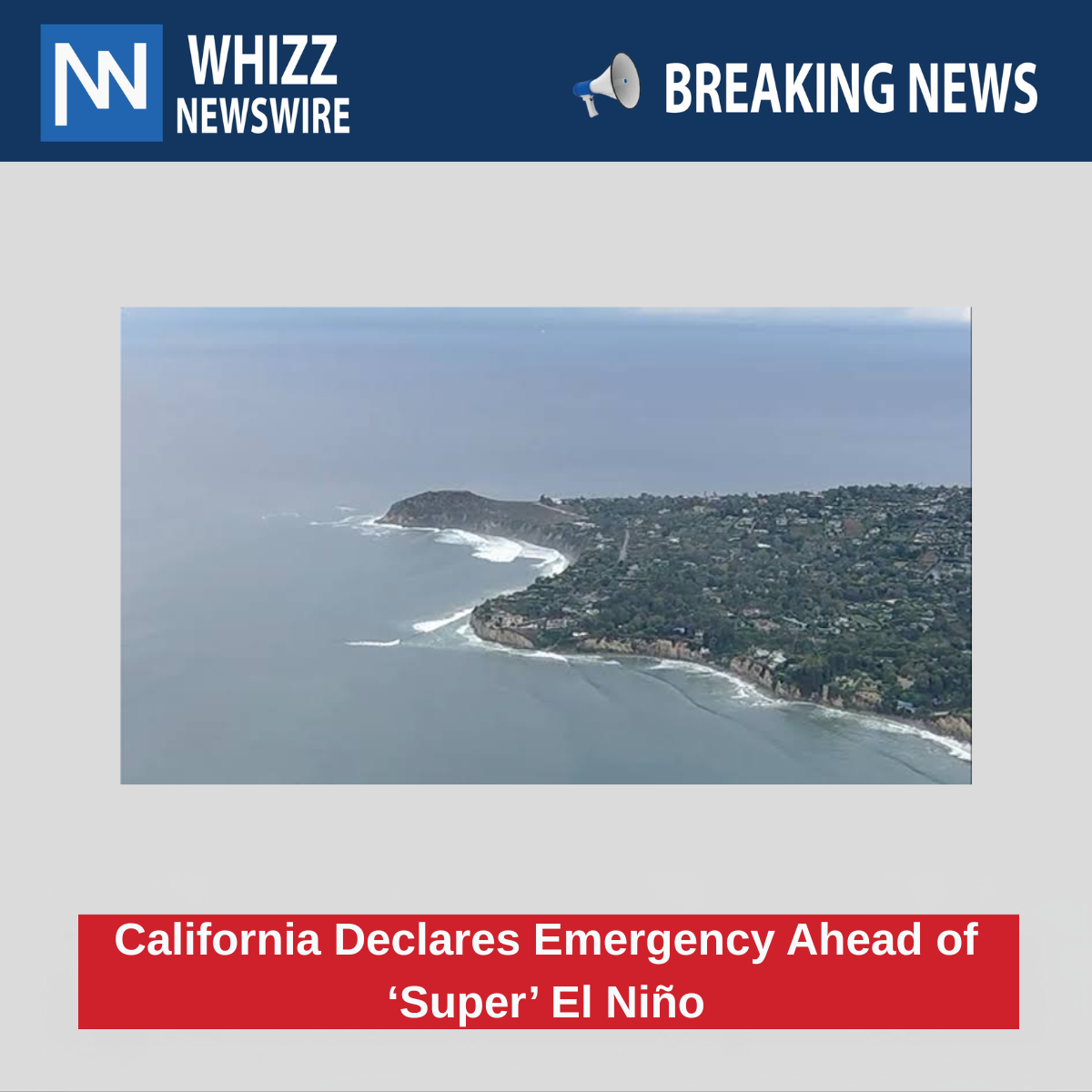
California is preparing for what forecasters cautions might be one of the strongest El Niño events ever recorded, and state officials are taking early action in order to anticipate the risks. On Monday Governor Gavin Newsom approved a statewide emergency declaration with the aim of accelerating flood preparations, pre-positioning essential supplies and improving coordination between state and local agencies before the winter storms come.
What Is the Reason for the Emergency Declaration at This Time?
The governor’s office states that the developing El Niño pattern is currently breaking records and is anticipated to become stronger during the fall and onwards into winter. Federal climate models indicate a very high probability of a “very strong” El Niño this season, together with a notable possibility that it could achieve a historic level of intensity. The proclamation is intended to allow California to begin its preparations in advance rather than having to wait until the first major storm arrives.
The governor’s statement said that this emergency proclamation is intended to simplify the measures being taken to help California get ready for this historic event; we are taking steps to prepare for this El Niño early since every Californian has a right to be safe in their home, to be connected with their community and to be protected when severe weather arrives.
What the Proclamation Actually Does
The declaration doesn’t change day‑to‑day life for most residents right now, but it unlocks important tools for state agencies:
Water Resources and Emergency Supplies
The department of Water Resources and Cal OES have the ability to deploy millions of sandbags, pumps and other equipment at key locations before the storms start. It has been reported that more than four million sandbags and hundreds of thousands of tons of rock are being placed at dozens of stockpile sites all over the state.
Highway and Road Safety Preparations
Caltrans is to have the traffic-control equipment, road-closure barriers and snow-removal machinery pre-positioned on those highways which are most susceptible to flooding, landslides and heavy snowfall, in particular in the mountain areas and in the low-lying coastal routes.
California National Guard Readiness
The California National Guard is ready to provide assistance with flood response, search-and-rescue operations, engineering tasks, and logistics if the local authorities ask for it.
Faster Environmental Permits and Flood Protection Measures
Environmental and natural resources agencies should speed up the granting of permits and reduce red tape in order to help local governments remove debris, strengthen levees and deal with flood risks more quickly.
Expanded Public Emergency Communications
In terms of public outreach, the Governor’s Office of Emergency Services should broaden its multilingual communications regarding flood zones, evacuation preparedness, power outages and emergency alerts so that people will know how to prepare and where to obtain help.
What El Niño Means for California’s Winter
El Niño is a climate phenomenon which occurs as a result of the trade winds over the Pacific becoming weaker, this causing the warm water to move eastward towards the U.S. West Coast. The movement of the water causes the Pacific jet stream to shift further south, generally leading to wetter than average conditions in the Gulf Coast and the Southeast, and usually resulting in an increase in storminess, rainfall and snowfall in certain areas of California.
Potential Impacts of a Strong El Niño on California
For California, a strong El Niño can mean:
- Heavier rain events and increased flooding in burn scars and flood‑prone areas
- More frequent atmospheric river storms targeting the state
- Higher snowpack in the Sierra Nevada, which can help drought conditions but also raise flood and avalanche risks
- Elevated threats of landslides, debris flows and coastal erosion during intense storm sequences
Effects on Marine Life and Coastal Fisheries
At the same time, El Niño interferes with normal ocean upwelling, and this can have an effect on marine life and fisheries near the coast by causing the nutrient-rich cold water close to the surface to decrease.
How Residents Can Prepare Now
State and local authorities are advising Californians not to delay in making preparations until the first storm arrives. Among the recommended actions are:
1. Check Your Local Flood and Landslide Risks
Find out your level of risk by checking if your home, place of work or school is situated in a flood zone, a landslide area or close to a creek or drainage that might overflow.
2. Subscribe to Emergency Alerts
Subscribe for alerts: Join the local emergency notification system so that you get warnings regarding evacuations, road closures, and severe weather.
3. Prepare an Emergency Kit
Make an emergency kit by including water, non-perishable food, medications, flashlights, batteries, a first-aid kit and important documents.
4. Clear Drains and Gutters
Clear the drains and gutters by removing any leaves and debris from the roofs, gutters, and storm drains surrounding your property in order to prevent water from pooling.
5. Plan Your Evacuation Routes
For evacuation, you should identify several ways of getting out of your neighbourhood, particularly if you live in a canyon, a burn scar, or a low-lying area, and beforehand decide on where you will go.
6. Avoid Driving Through Floodwater
Don’t drive through floodwater since even water that is only a little deep can carry vehicles off the road; instead turn around and find another route.
A Proactive Stance Ahead of Storm Season
Caroline Thomas Jacobs, who is in charge of the California Office of Emergency Services, stressed that the state is deliberately taking steps to meet the threat before it occurs. “We are taking measures such as planning in advance and arranging our resources prior to the arrival of El Niño so that communities and first responders will have the personnel, equipment, and support they need in order to prepare for severe weather, respond swiftly when the circumstances change, and protect both lives and property throughout California,” she said.
Since the forecasts indicate that an El Niño event could be historic, the message coming from Sacramento is clear in that the storm season might be particularly severe, but preparation should begin at this moment. Individuals are therefore advised to keep themselves informed, understand the local risks and take some simple actions today in order to lessen the effects when the rain comes.
Do you like this personality?